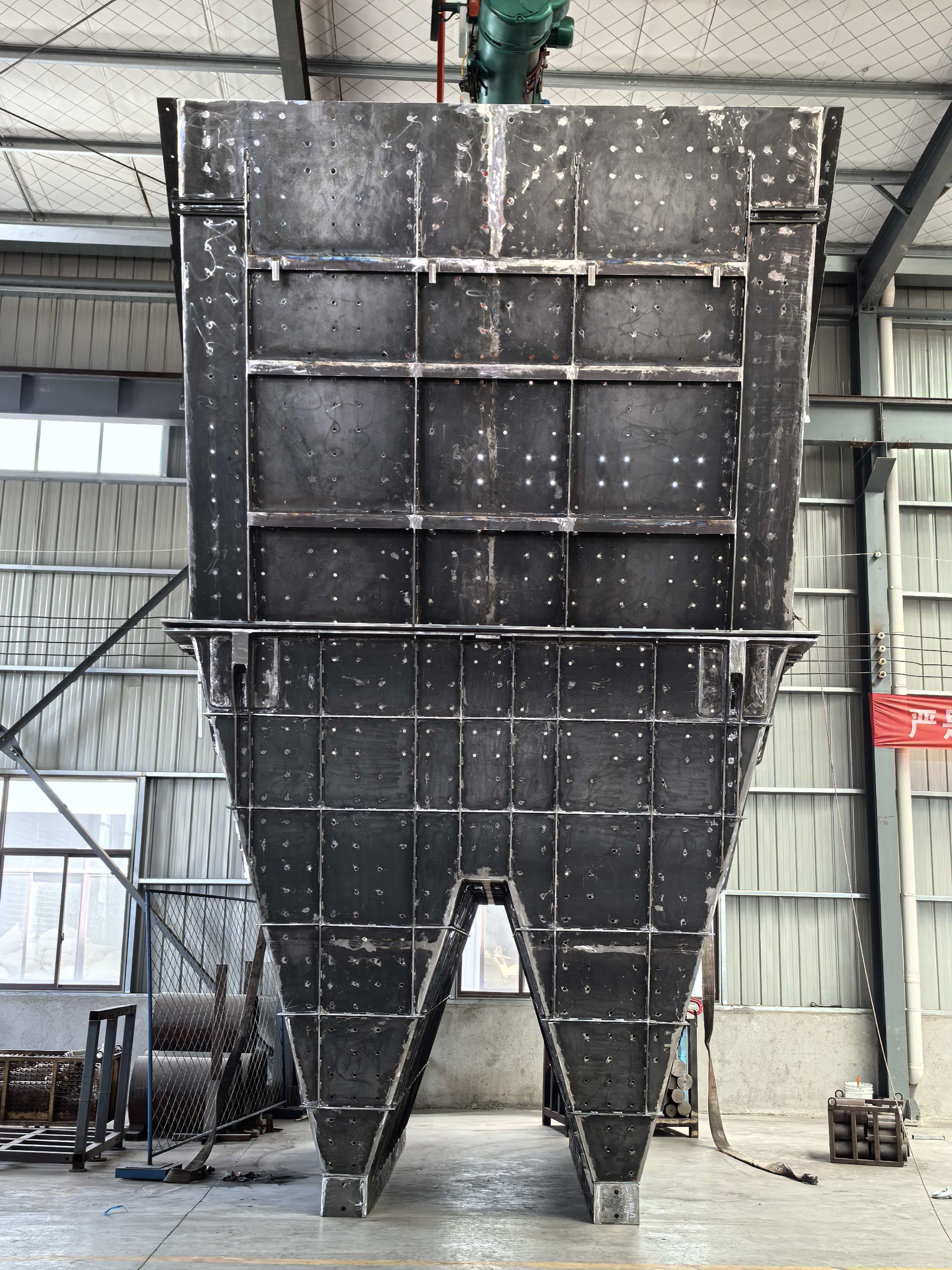
Mining feed hoppers and transfer chutes for quarry and processing plant RFQs.
SinoField Machinery supports RFQs for large welded mining feed hoppers, ore hoppers, transfer chutes, surge hopper sections, and loading or discharge structures used in crushing, screening, conveyor, quarry, and aggregate processing lines.
This page is for buyers sourcing a fabricated hopper or transfer chute from drawings, site dimensions, worn-part photos, or plant layout requirements. The RFQ should confirm capacity, inlet and outlet interfaces, liner requirement, material handled, welding scope, coating, transport size, and destination before quotation.
Applications
Crusher feed and surge hopper systems, Mining and quarry bulk material transfer, Aggregate plant loading and unloading points, Drawing-based welded hopper replacement
Compatible equipment
Crushing plants, Vibrating feeders, Belt conveyor transfer points, Screening plants, Mining and aggregate processing lines
Material options
Q355B or customer-specified structural steel, Wear-resistant liner, ceramic, rubber, or PU lining if required, Painting, primer, or coating according to site requirement
MOQ / lead time
Project based by drawing, size, lining scope, and shipping plan · Confirmed after drawing, welding, liner, coating, and transport review
Third-party inspection
Buyer-arranged, buyer-nominated, or SinoField-coordinated inspection can be included when required. Fees, timing, scope, and report format are confirmed and covered by the buyer.
Failure modes and control points
Convert specs into buyer risk.
Wrong fit or grade
Mining feed hopper quotes depend on plate thickness, structural ribs, wear liner design, inlet and outlet geometry, and the working condition at the transfer point.
Wrong process route
A hopper with the same outside size can require a different fabrication route when the liner type, bolt pattern, inspection scope, or transport split changes.
Wrong quote scope
For replacement projects, site photos are useful, but drawings or measured interface dimensions are needed before final factory review.
RFQ checklist
2D/3D drawing, plant layout, or installed-position photos
Overall size, inlet size, outlet size, capacity, and mounting interface
Material handled, particle size, impact and abrasion condition
Welding standard, NDT or inspection requirement, and surface treatment
Transport size limit, lifting points, destination port, and packing requirement
Material and fit notes
Mining feed hopper quotes depend on plate thickness, structural ribs, wear liner design, inlet and outlet geometry, and the working condition at the transfer point.
A hopper with the same outside size can require a different fabrication route when the liner type, bolt pattern, inspection scope, or transport split changes.
For replacement projects, site photos are useful, but drawings or measured interface dimensions are needed before final factory review.
Inspection points
Overall dimension, inlet and outlet opening check
Welding seam, rib, lifting point, and mounting interface review
Wear liner layout, bolt hole pattern, and replaceable liner fit check
Surface preparation, primer, painting, or coating confirmation
Trial assembly, packing split, and transport size review where required
Third-party inspection
Third-party inspection is available when required for standard products or custom production orders. Buyers may arrange the inspector directly, nominate a specific inspection agency, or ask us to coordinate with a suitable provider.
Inspection fees, re-inspection fees, report charges, timing, and inspection scope are confirmed and covered by the buyer before order or shipment.
Buyer questions
Practical answers before sending an RFQ.
Can a mining hopper be quoted from photos only?
Photos can start the review, but drawings, overall dimensions, inlet and outlet sizes, liner details, material handled, and quantity are needed before a reliable quotation.
Can the hopper be made with wear liners?
Yes. Wear-resistant steel, ceramic, rubber, PU, or other liner options can be reviewed when the material handled, impact condition, bolt layout, and replacement method are defined.
What affects lead time for a large welded hopper?
Plate thickness, welding workload, liner type, coating, inspection requirement, trial assembly, packing split, and oversized transport planning all affect lead time.
Related RFQ routes
Use these related pages to narrow the product scope.